The biggest marketing problems I find are the ones owners can’t see, because they’re standing too close to their own business.
After decades of looking at businesses from the outside, I see the same three patterns repeat.
1. You take what you do for granted
The work that makes your business good often goes unseen on your website. Owners live with their quality checks, their process improvements, and their hard-won cost savings every day, so those things stop feeling special. They never make it onto the page.
Here’s what that looks like in practice. A U.S. manufacturer of water filtration products came to me with an impressive story they weren’t telling. They had stacks of specifications, independent testing data, and a long list of government requirements they’d met. In many cases, they had gone well beyond what the standards required.
None of it reached the customer. The data sat on the site as data: numbers, certifications, and acronyms with no explanation of what they meant for the person drinking the water.
The dots were all there. Nobody had connected them:
- The testing proved something. It proved their filters remove what they claim to remove, delivering cleaner, healthier water at home.
- Going beyond the requirements was a choice. That choice says more about the company than any slogan could. That’s exactly why someone who cares about their water should buy from them instead of a competitor.
- There was an environmental story too. Every household using their filters keeps thousands of plastic bottles out of landfills. It wasn’t mentioned anywhere.
The company didn’t need new claims. It needed someone to translate what it already did into why it mattered to a buyer.
What to do instead: Walk through how your product or service actually gets made, step by step, and ask “so what?” at every stage. Answer how your company’s product or service makes a customer’s life better or safer on your website.
2. You never study the competition
Most businesses rarely look at their competitors’ marketing, and rarely compare it line by line with their own. They know who the competitors are. They just haven’t read their websites lately.
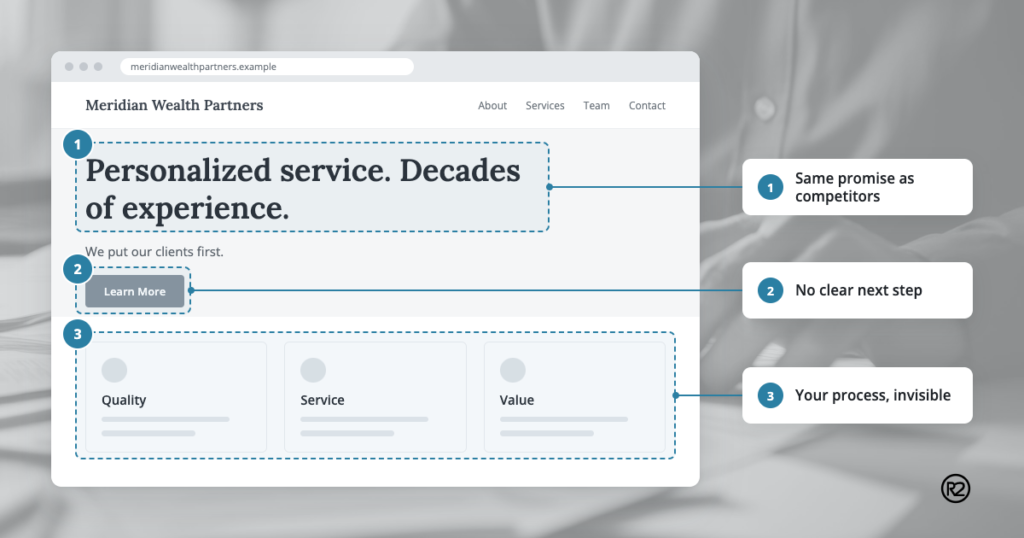
The result is predictable. Put your homepage next to your top two competitors’ and cover the logos. In most of the audits I do, it’s hard to tell whose is whose. When everyone makes the same promises, buyers decide on price.
What to do instead: Once a year, read your top competitors’ websites the way a customer would. Note what they all say, then find what only you can say and lead with it.
3. You treat your website as a to-do item
For many owners, the website is something to check off the list. It got built, it went live, and it hasn’t been touched since. That’s a costly way to think about one of your hardest-working sales tools.
When you treat it as finished, the signs are easy to spot: news from two years ago, team members who have moved on, and no obvious next step for a visitor ready to talk. Interested buyers leave without a trace.
What to do instead: Give your website an owner and a calendar. Review it quarterly, make sure every page ends with a next step, and measure how many inquiries it actually produces.
The value of an outside view
These misses come from standing too close, not from a lack of effort.
That’s why I offer free audits. I review your business like a new customer and show you what’s working, what’s getting lost, and what to fix first. There are three, depending on where you want to start:
- Positioning Audit: where your brand blends in with competitors and where it can stand apart.
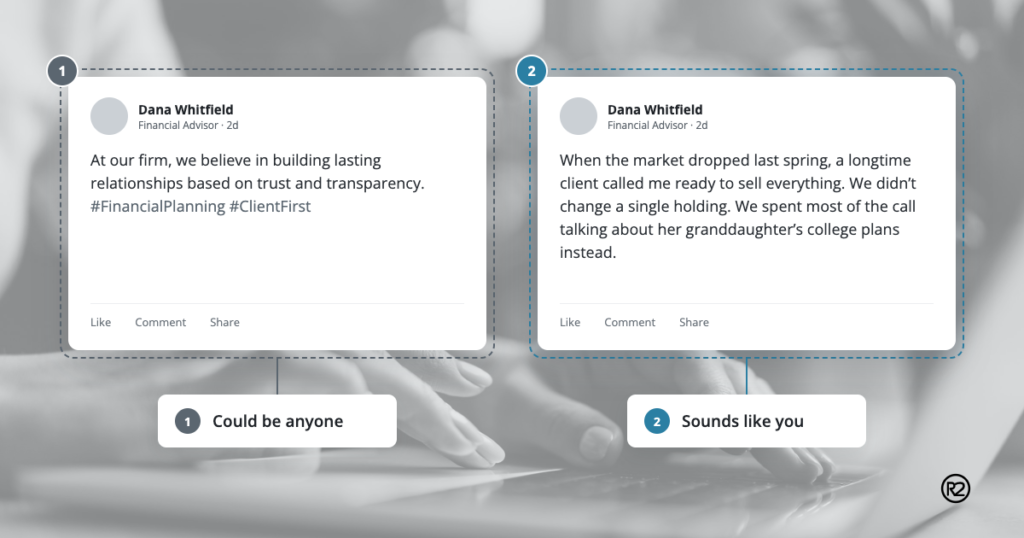
- Voice Audit: whether your content sounds like you or like everyone else.
- Marketing Leadership Audit: where your marketing presently stands today and what to fix first.
Each one is free, and I review every request personally. You’ll hear back from me within three business days.